
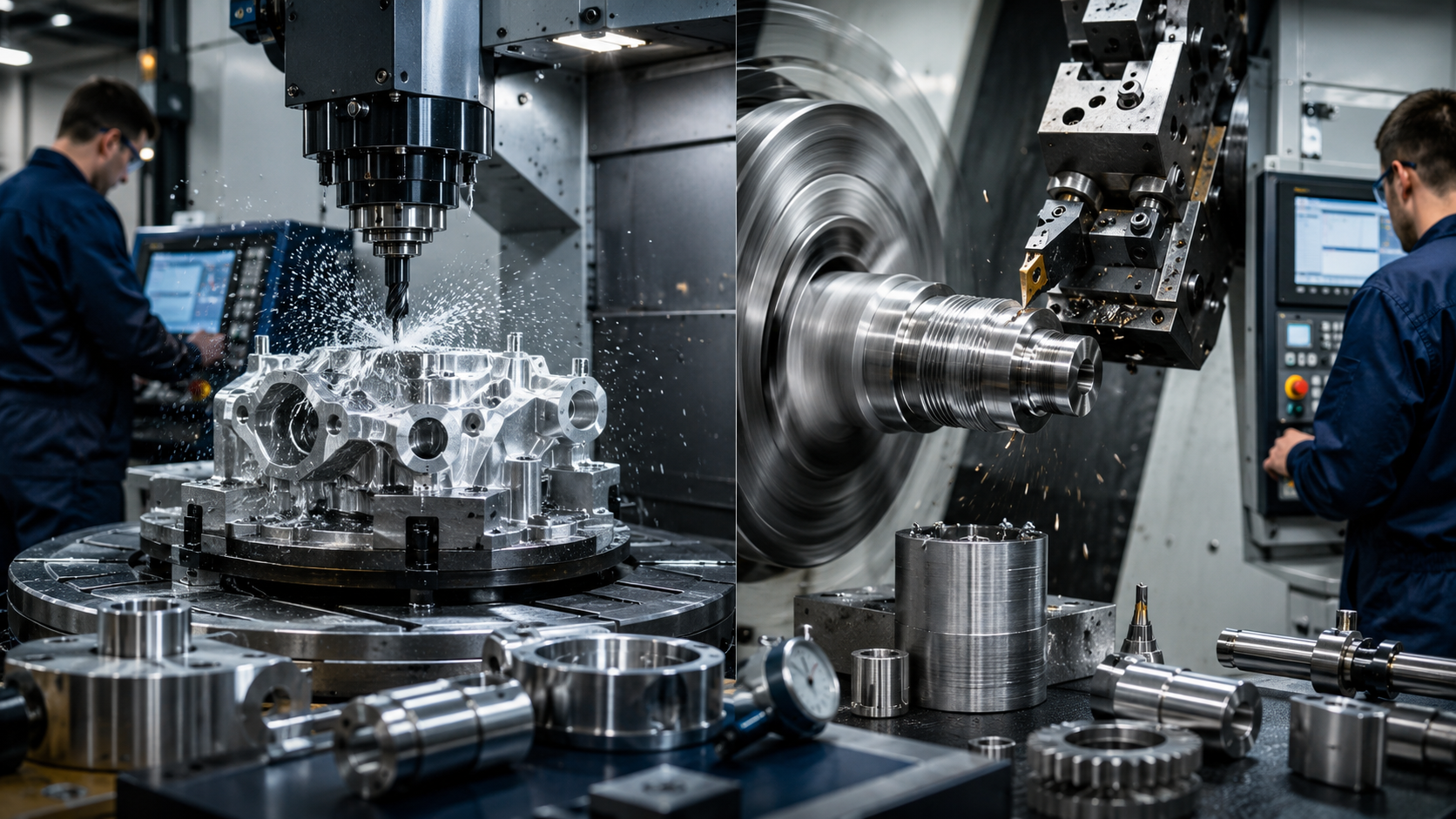
When selecting the right machining method for a manufacturing project, understanding CNC Milling vs CNC Turning Australia is essential. While both are precision CNC machining processes used to manufacture high-quality components, they operate differently and are suited to different types of parts. Choosing the correct process can improve production efficiency, reduce costs, and ensure superior product quality. At Gaja Engineering, we provide advanced CNC milling and CNC turning services across Australia, delivering precision-engineered components for OEMs and manufacturers.
What is CNC Milling?
CNC milling is a machining process where a rotating cutting tool removes material from a stationary workpiece. The cutting tool moves along multiple axes to create complex shapes, pockets, slots, holes, and intricate geometries with exceptional accuracy.
Modern multi-axis CNC machining enables manufacturers to produce highly detailed components with fewer setups, improving both productivity and precision.
Common CNC milling applications include:
- Complex machine components
- Engine housings
- Tooling and fixtures
- Precision brackets
- Custom aluminium and steel parts
What is CNC Turning?
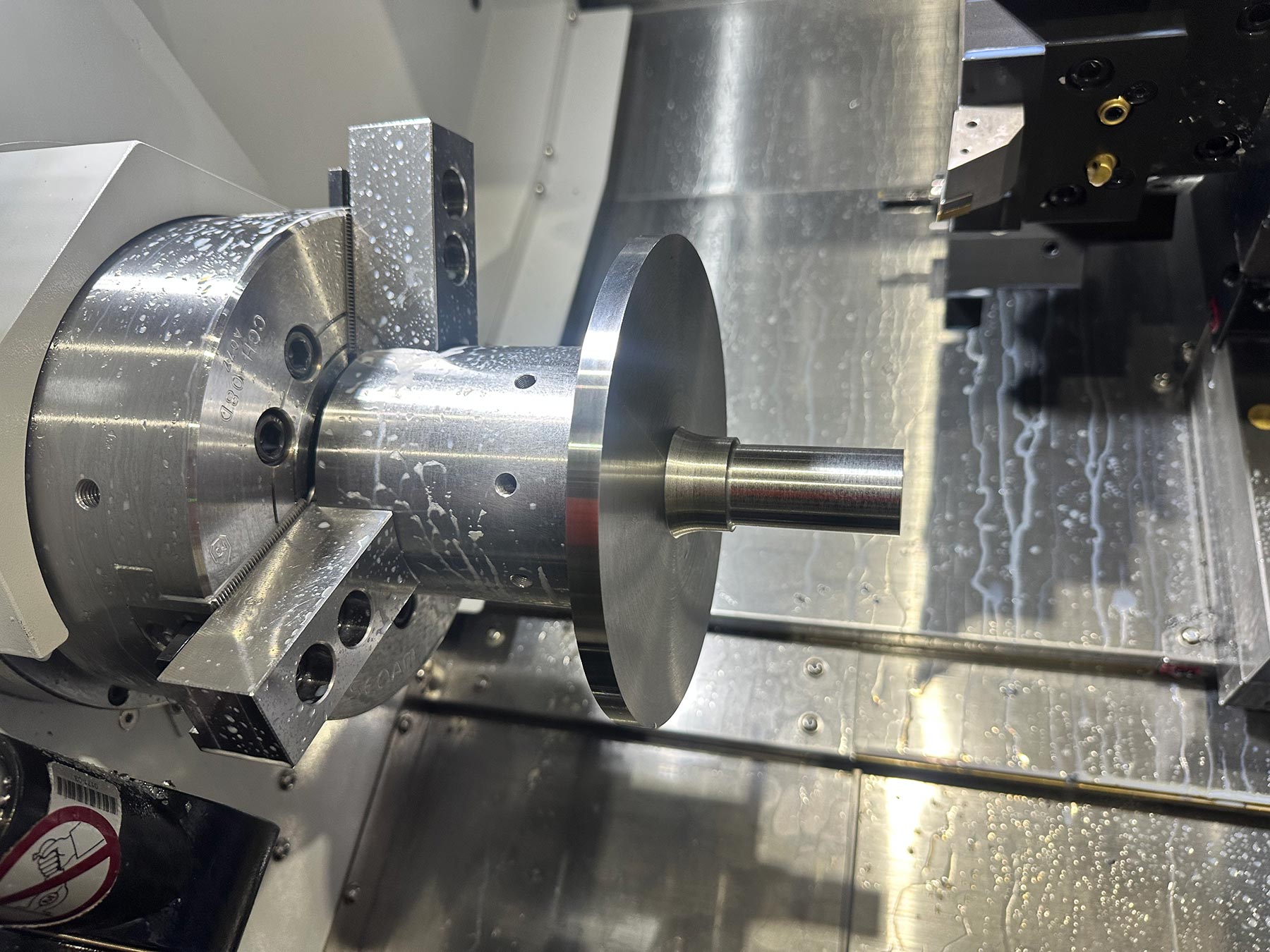
The CNC turning process works differently. Instead of the cutting tool rotating, the workpiece spins while a stationary cutting tool removes material. CNC turning is ideal for producing symmetrical cylindrical parts quickly and efficiently.
Typical CNC turning applications include:
- Shafts
- Bushings
- Rollers
- Pins
- Sleeves
- Hydraulic fittings
Because turning requires fewer tool movements, it is often faster and more economical for round components.
| Feature | CNC Milling | CNC Turning |
|---|---|---|
| Machine Operation | Rotating cutting tool | Rotating workpiece |
| Best For | Complex geometries | Cylindrical parts |
| Workpiece Movement | Stationary | Rotating |
| Cutting Method | Multi-directional | Linear cutting |
| Complexity | High | Moderate |
| Production Speed | Moderate | Fast for round parts |
| Cost Efficiency | Better for complex parts | Better for simple cylindrical parts |
| Typical Industries | Aerospace, Defence, Mining | Automotive, Agriculture, Industrial Equipment |
Advantages of CNC Milling
CNC milling offers several advantages:
- Produces highly complex geometries
- Excellent dimensional accuracy
- Supports multi-axis machining
- Suitable for various metals and engineering plastics
- Ideal for custom and low-volume production
Limitations
- Longer machining times for intricate parts
- Generally higher machining costs than turning
- More tool changes may be required
Advantages of CNC Turning
CNC turning provides:
- High production efficiency
- Excellent surface finishes
- Lower manufacturing costs for round parts
- Fast cycle times
- Consistent repeatability for large production runs
Limitations
- Limited to rotationally symmetrical components
- Less suitable for highly complex geometries
Which Components Suit Each Process?
Choose CNC Milling when manufacturing:
- Precision housings
- Mounting plates
- Custom brackets
- Tooling components
- Complex prototypes
Choose CNC Turning when manufacturing:
- Shafts
- Rollers
- Spacers
- Pins
- Bearing components
Many advanced components require both milling and turning. Manufacturers often combine these processes to machine complex parts with cylindrical features, threaded sections, precision holes, and intricate surfaces in a single production workflow.
OEM Applications Across Australian Industries
Precision CNC machining services Australia support numerous industries, including:
- Automotive
- Mining
- Aerospace
- Defence
- Industrial Equipment
- Agriculture
- Heavy Engineering
These sectors rely on high-quality CNC machined parts that meet strict dimensional tolerances and performance standards.
Why Choose Gaja Engineering?
At Gaja Engineering, we combine advanced CNC milling, CNC turning, and precision inspection processes to deliver reliable manufacturing solutions for Australian businesses. Our experienced team produces high-quality components for OEMs, industrial manufacturers, and engineering companies, maintaining strict quality standards from prototype development through to production.
Whether your project requires complex machined components, high-volume cylindrical parts, or integrated machining solutions, our expertise in CNC Milling vs CNC Turning Australia ensures every component is manufactured for performance, consistency, and long-term reliability.
Explore our services:
- CNC Machining Services
- OEM Manufacturing Services
- Metal Fabrication Services
- Contact Us
Frequently Asked Questions (FAQ)
1. What is the main difference between CNC milling and CNC turning?
CNC milling uses a rotating cutting tool on a stationary workpiece, while CNC turning rotates the workpiece against a stationary cutting tool.
2. Which process is more suitable for complex parts?
CNC milling is ideal for components with intricate shapes, multiple faces, pockets, and complex geometries.
3. When should I choose CNC turning?
Choose CNC turning for cylindrical or rotationally symmetrical components such as shafts, pins, rollers, and bushings.
4. Can CNC milling and CNC turning be combined?
Yes. Many precision components require both processes to achieve complex features and tight tolerances efficiently.
5. Which industries commonly use CNC milling and CNC turning?
Automotive, mining, aerospace, defence, agriculture, heavy engineering, industrial equipment, and OEM manufacturing all rely on these machining processes.
6. Does Gaja Engineering provide both CNC milling and CNC turning services in Australia?
Yes. Gaja Engineering offers precision CNC milling and CNC turning services, supporting prototype development, low-volume production, and large-scale manufacturing for Australian industries.

