

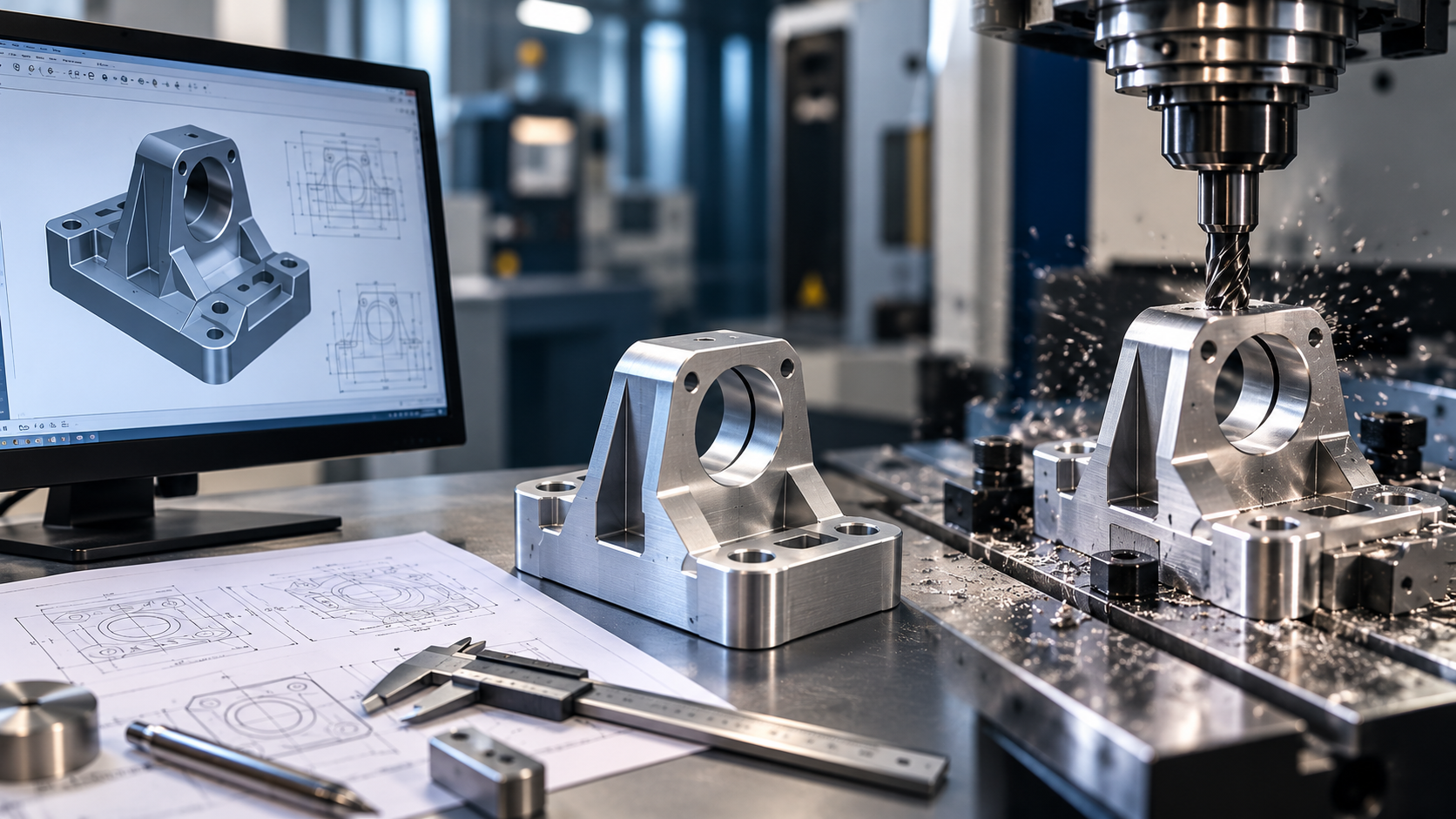
Moving from an engineering drawing to a production-ready component can be challenging. Design changes, material selection, machining tolerances and production requirements can all affect how quickly a product reaches the manufacturing stage.
CNC machining prototypes provide a practical way to test, validate and refine components before committing to larger production runs. For Australian manufacturers, OEMs and product developers, working with an experienced CNC machining partner can help reduce design issues, improve manufacturability and accelerate the transition from prototype to production.
What Is CNC Prototype Machining?
CNC prototype machining is the process of producing a physical component directly from a digital CAD model or engineering drawing using computer-controlled machining equipment.
Unlike purely visual prototypes, CNC-machined prototypes can be manufactured from engineering-grade metals and plastics and evaluated for dimensions, fit, function and assembly.
For companies looking for CNC prototype machining services in Australia, this provides an important opportunity to identify manufacturing issues before investing in larger production quantities.
How Does CNC Machining Move a Product from Design to Production?
A successful prototype-to-production process typically involves several stages.
1. Review the Engineering Design
Before machining begins, engineers review the drawing, CAD model, material requirements, tolerances and intended application.
This stage can identify potential manufacturing challenges early. Design for Manufacturability (DFM) can also help simplify machining operations and reduce unnecessary production costs.
2. Manufacture the Prototype
Once the design is ready, CNC machining can produce an accurate physical prototype.
Gaja Engineering’s CNC capabilities include 4-axis machining, CNC milling and CNC turn/mill operations. These processes can be used for components requiring drilling, milling, grooving, tapping, turning and other precision machining operations.
3. Test and Refine the Component
The prototype can then be assessed for dimensional accuracy, fit, functionality and assembly.
If changes are required, the CAD design can be modified and another prototype produced before production tooling or larger quantities are committed.
This iterative approach can help reduce costly changes later in the manufacturing process.
4. Prepare for Repeat Production
Once the prototype has been validated, the manufacturing process can be reviewed for repeatability, material availability, machining time and quality requirements.
This is where CNC machining for product development becomes particularly valuable. The same manufacturing partner can help transition a validated prototype into small-batch or repeat production.
Why Choose 4-Axis CNC Machining for Prototypes?
4-axis CNC machining adds a rotary axis to conventional X, Y and Z machining. This allows suitable components to be repositioned or machined across multiple surfaces with fewer manual setups.
For complex prototype components, fewer setups can help improve consistency while reducing handling and machining time.
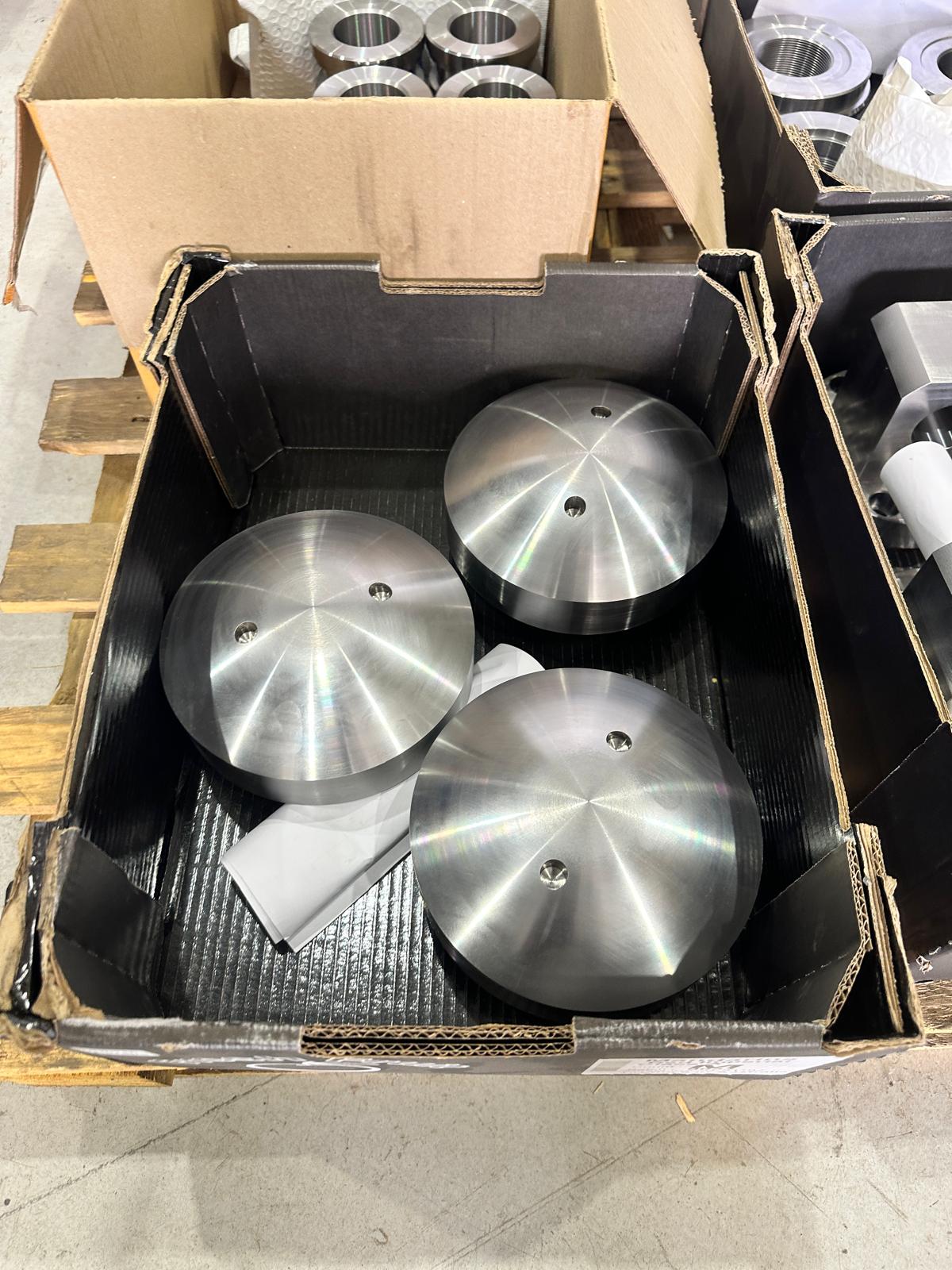
Gaja Engineering uses 4-axis CNC machining for applications including housings, plates, moulds, jigs, components, prototypes, replacement parts and product modifications.
How Can Australian Manufacturers Reduce Prototype-to-Production Delays?
The fastest path from design to production usually starts with clear communication.
Providing an accurate 2D engineering drawing, STEP file or physical model, together with material specifications, quantities and tolerances, allows the manufacturing team to assess the project more effectively.
Gaja Engineering supports businesses with CNC machining, fabrication and OEM/ODM manufacturing, helping connect engineering design, prototyping and production requirements.
Ready to Turn Your Design Into a Production-Ready Part?
REQUEST A CNC MACHINING QUOTE →
Conclusion
CNC machining prototypes can help Australian businesses validate designs, identify manufacturing issues and move confidently toward production.
By combining prototype machining with DFM, precision CNC milling, 4-axis machining and production planning, businesses can create a smoother path from engineering drawing to finished component.
If you have a prototype, CAD model or engineering drawing ready for machining, Gaja Engineering can help you assess the next manufacturing step.
Have you experienced delays moving from prototype to production? Share your experience or questions in the comments and share this article with your engineering or manufacturing team.
Frequently Asked Questions (FAQ)
1. What is CNC prototype machining?
CNC prototype machining is the process of producing a physical prototype from a CAD model or engineering drawing using computer-controlled machining equipment. It allows manufacturers to test dimensions, fit and functionality before larger production runs.
2. How does CNC machining help move a prototype into production?
CNC machining allows businesses to validate a component, identify design or manufacturing issues, refine the design and establish a repeatable manufacturing process before committing to production quantities.
3. What is the difference between CNC prototyping and CNC production machining?
CNC prototyping focuses on validating a design, often using smaller quantities. CNC production machining focuses on producing validated components repeatedly and efficiently at the required production volume.
4. Is CNC machining suitable for prototypes in Australia?
Yes. CNC machining can be used for prototype components made from a wide range of engineering materials. The appropriate process depends on the component geometry, material, tolerances, quantity and application.
5. When should I use 4-axis CNC machining for a prototype?
4-axis CNC machining can be useful when a component has features across multiple surfaces or geometry that benefits from an additional rotary axis. It can reduce setups and improve machining flexibility for suitable parts.
6. Can a CNC prototype be manufactured directly from an engineering drawing?
Yes. A CNC machining provider can use an engineering drawing and, where available, a CAD/STEP file to assess the component’s dimensions, tolerances, material and manufacturing requirements before machining.

