

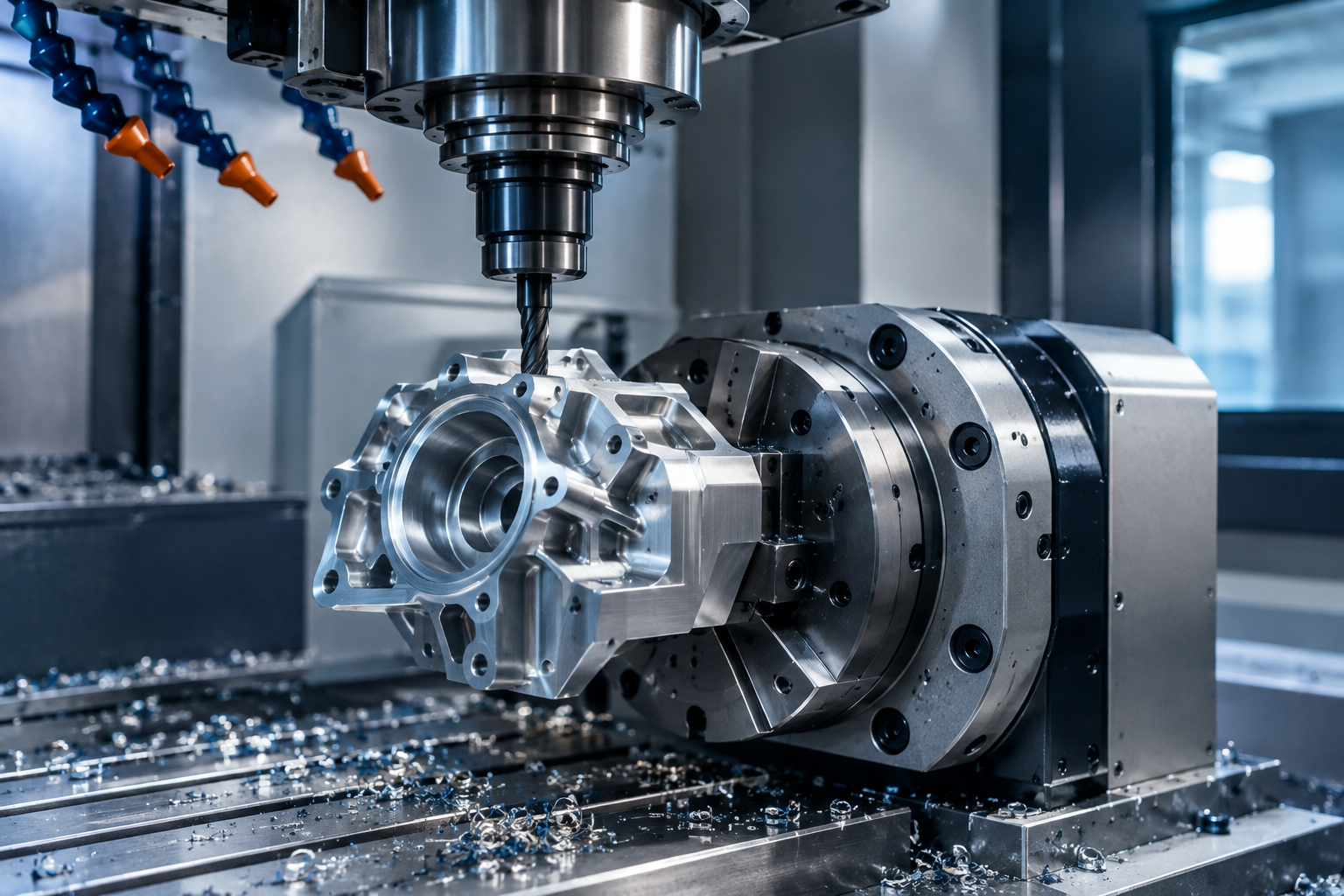
4-axis CNC machining has become an important manufacturing process for Australian businesses that need accurate, repeatable and efficient production of complex metal components. By adding a fourth axis of movement to conventional CNC machining, manufacturers can machine multiple faces and more complex geometries with fewer manual setups.
For Australian manufacturers, OEMs, engineering companies and product developers, choosing the right machining process can reduce production time, improve accuracy and simplify component manufacturing.
At Gaja Engineering, our 4-axis machine centres support a wide range of machining operations, including drilling, milling flats, grooving, thread tapping and 3D contouring. Our capabilities are suitable for prototypes, components, moulds, housings, plates, modifications and replacement or spare parts.
What Is 4-Axis CNC Machining?
4-axis CNC machining is a computer-controlled manufacturing process that uses four axes of movement to machine complex components with greater flexibility than conventional 3-axis machining.
In addition to the standard X, Y and Z movements, the fourth axis allows the workpiece or cutting tool to rotate. This makes it possible to access multiple surfaces without repeatedly repositioning the component.
For manufacturers, this can mean:
- Fewer manual setups
- Improved dimensional consistency
- Better access to complex features
- Reduced machining time
- Greater production repeatability
Gaja Engineering operates a Doosan DNM 6700 vertical milling machining centre with 4-axis capability, providing a working envelope of up to 1100 mm on X, 650 mm on Y and 625 mm on Z, with a 1300 kg load capacity.
What Are the Benefits of 4-Axis CNC Machining?
1. Improved Machining Accuracy
Reducing the number of times a component needs to be repositioned can help minimise setup-related errors. This is particularly valuable when manufacturing precision components with multiple machined surfaces.
2. Greater Production Efficiency
4-axis machining can complete multiple operations in fewer setups. This can help Australian manufacturers reduce handling, shorten machining cycles and improve overall production efficiency.
3. Complex Component Manufacturing
A fourth axis provides greater flexibility when machining angled surfaces, contours, holes and features around a component.
This makes 4-axis CNC machining for complex components particularly useful for engineering and manufacturing applications.
4. Better Repeatability
Once a CNC program has been developed and validated, the machining process can be repeated consistently across production batches.
This makes 4-axis CNC machining suitable for both prototype manufacturing and production components.
What Are the Applications of 4-Axis CNC Machining?
4-axis machining can be used across a broad range of Australian manufacturing applications.
Common examples include:
- Moulds and dies
- Engineering plates
- Machine housings
- Jigs and fixtures
- Prototypes
- Custom components
- Replacement parts
- Spare parts
- Product modifications
- Complex machined components
Gaja Engineering also provides CNC milling using 4-axis indexed processes for engineering-grade metals and plastics, supporting prototypes and end-use production components.
When Should You Use 4-Axis CNC Machining?
4-axis CNC machining is ideal when a component has multiple machined surfaces, complex features or geometries that would require several setups using conventional 3-axis machining.
It can be particularly suitable when you need:
- Complex geometries
- Consistent repeatability
- Accurate multi-face machining
- Prototype components
- Small-to-medium production runs
- Reduced manual handling
- Faster machining workflows
However, the best machining process depends on the component design, material, tolerances, production volume and required finish.
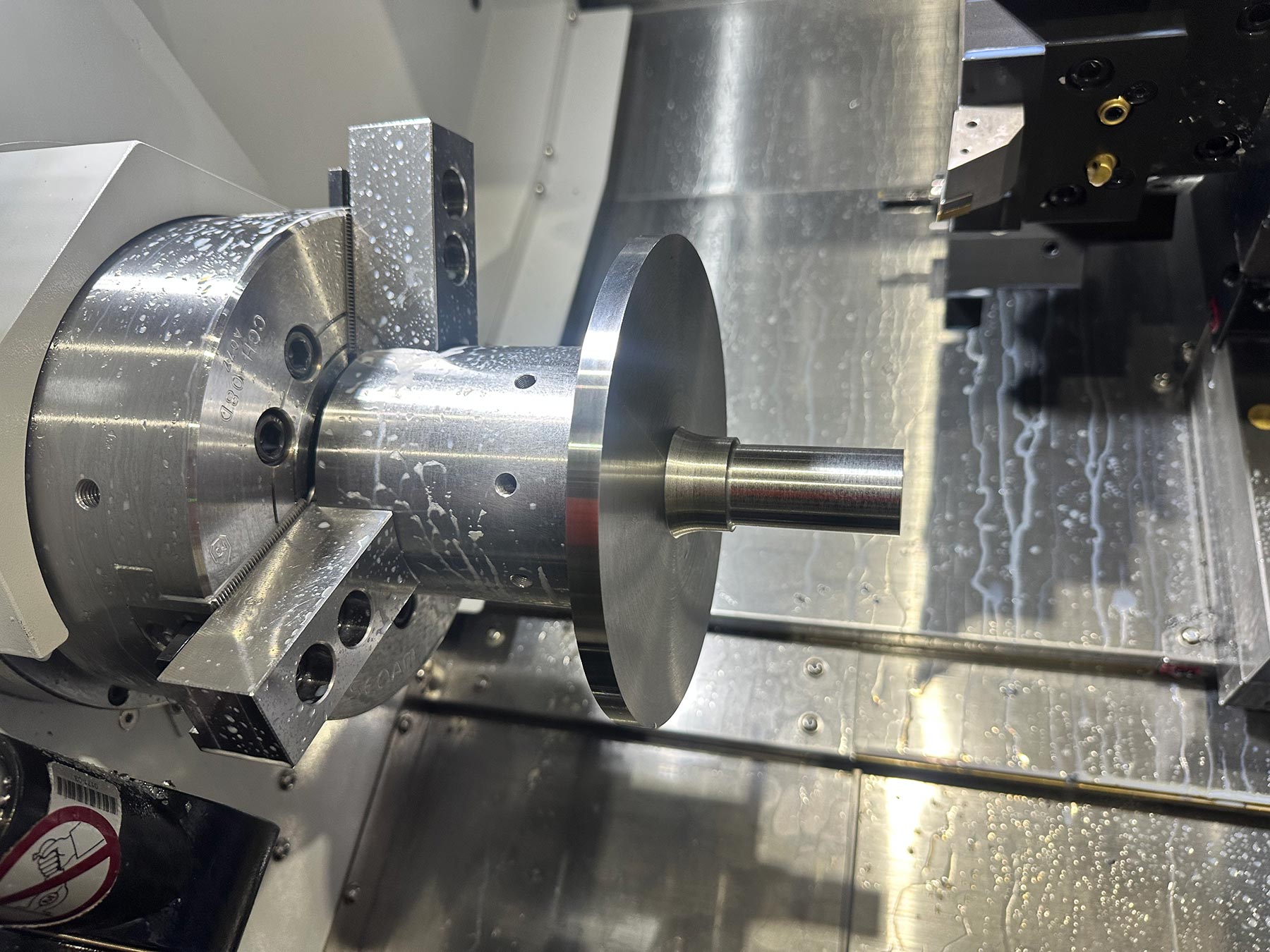
For components requiring both turning and milling operations, a CNC turn/mill process may be more appropriate.
4-Axis vs 3-Axis CNC Machining: Which Is Better?
Neither process is universally better.
3-axis CNC machining can be highly effective for simpler components where most features can be accessed from one direction.
4-axis CNC machining becomes more valuable when additional rotational movement is required to access multiple surfaces or complex features.
The right choice should be based on your component geometry, tolerance requirements, production quantity and manufacturing objectives.
Why Choose Gaja Engineering for 4-Axis CNC Machining?
Gaja Engineering is an Australian engineering company providing precision machining, fabrication and manufacturing solutions. Its CNC machining capability supports prototypes, individual components and production requirements, while its broader manufacturing services can take projects from engineering drawings through to practical production solutions.
For Australian businesses looking for 4-axis CNC machining services in Adelaide, the combination of machining capability, engineering knowledge and manufacturing experience can help turn technical drawings into accurate, production-ready components.
Have a component that requires precision 4-axis machining?
Send Gaja Engineering your 2D drawing, STEP file or component requirements and discuss your project with the engineering team.
Conclusion
4-axis CNC machining provides Australian manufacturers with greater flexibility, accuracy and efficiency when producing components with multiple surfaces or complex features. From prototypes and moulds to precision engineering components and replacement parts, it can help reduce setups while maintaining consistent production quality.
Choosing the right CNC machining process ultimately depends on the component design, material, tolerances and production requirements.
If you found this guide useful, share it with your engineering, procurement or manufacturing network and let us know your thoughts in the comments or through Gaja Engineering’s contact team. Your feedback can help us create more practical CNC machining resources for Australian manufacturers.
Need precision machining for your next project? Contact Gaja Engineering to discuss your requirements.
Frequently Asked Questions (FAQ)
1. What is 4-axis CNC machining?
4-axis CNC machining is a computer-controlled machining process that uses X, Y, Z and an additional rotational axis to manufacture components with multiple surfaces and complex features with fewer manual setups.
2. What are the main benefits of 4-axis CNC machining?
The main benefits include improved accuracy, fewer setups, better access to complex features, greater repeatability, reduced handling and improved production efficiency.
3. What can a 4-axis CNC machine manufacture?
A 4-axis CNC machine can manufacture moulds, plates, housings, jigs, fixtures, prototypes, replacement parts, spare parts and complex engineering components.
4. Is 4-axis CNC machining better than 3-axis machining?
4-axis CNC machining can be more efficient for components requiring multiple-sided or complex machining. However, 3-axis machining may be more economical for simpler components. The best option depends on component geometry, tolerances, material and production volume.
5. When should I use 4-axis CNC machining?
4-axis CNC machining is suitable when a component requires machining on multiple surfaces, angled features, complex contours or fewer manual setups. It is commonly used for prototypes, production components, moulds and precision engineering parts.
6. Does Gaja Engineering provide 4-axis CNC machining in Adelaide?
Yes. Gaja Engineering provides 4-axis CNC machining and CNC milling capabilities in Adelaide for prototypes, components, moulds, housings, plates, modifications and replacement or spare parts.

