

Modern fabrication projects demand more than simply joining metal. Manufacturers need accuracy, consistency, productivity and reliable lead times. This makes the choice between robotic welding and manual welding increasingly important. So, which approach is better?
The answer depends on project volume, complexity, repeatability and production goals. For Australian manufacturers, understanding the strengths of each method can help reduce rework, improve efficiency and select the right welding process.
What Is Robotic Welding?
Robotic welding uses automated robotic equipment to perform programmed welding operations with controlled movement and repeatable parameters. Gaja Engineering provides specialised robotic welding for batching and ongoing welding requirements, using a six-axis robotic system with a servo-driven positioner.
For repetitive fabrication work, robotic welding can provide consistent weld placement, improved production speed and reduced manual handling. It is particularly useful when manufacturers need repeatable results across multiple components.
What Is Manual Welding?
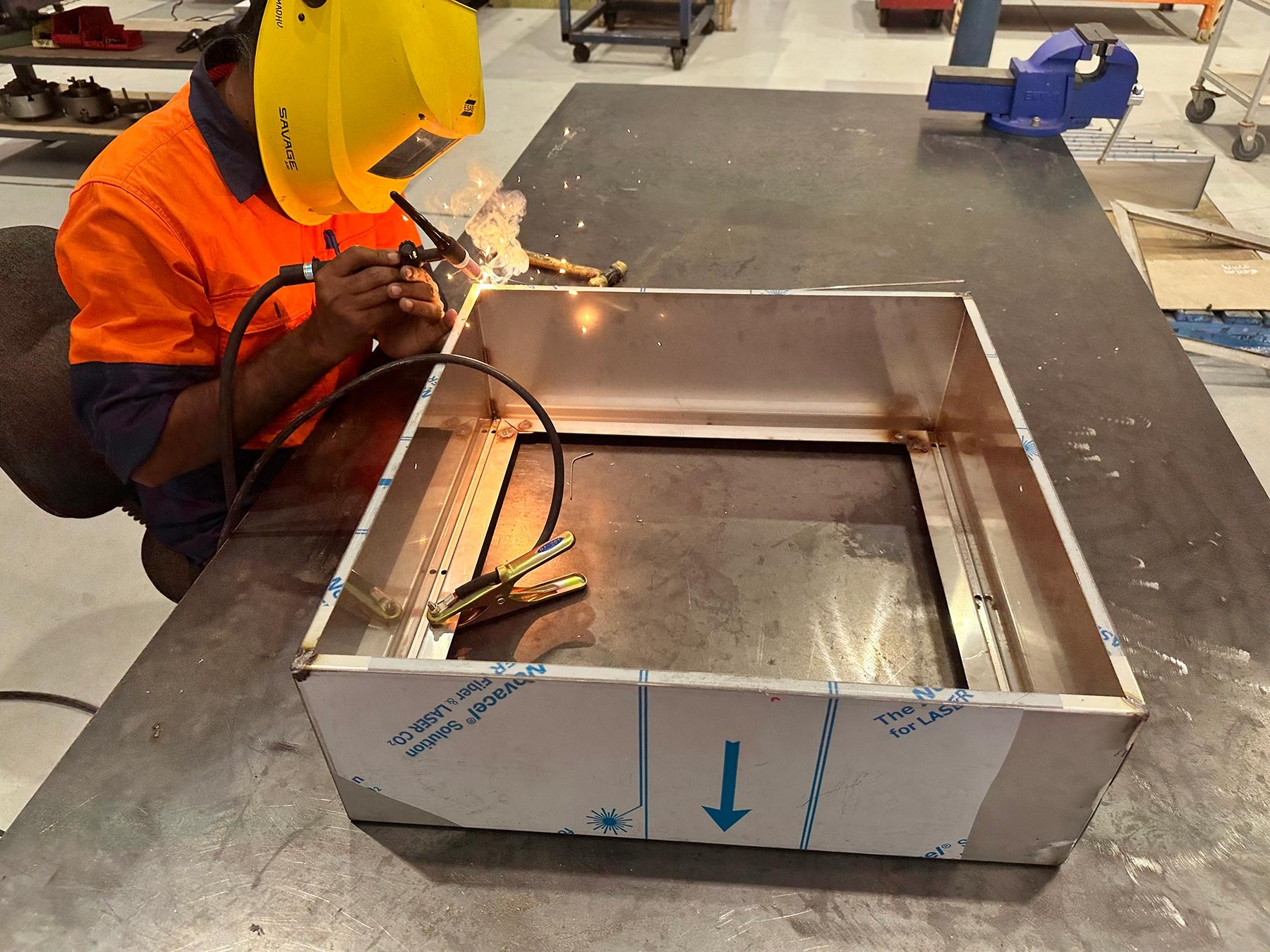
Manual welding relies on a skilled welder controlling the welding process directly. This provides flexibility when working with prototypes, repairs, complex assemblies, variable geometries or low-volume projects.
Manual welding remains valuable because experienced welders can adapt quickly to changes in fit-up, material and project requirements. Gaja Engineering’s welding and fabrication capabilities cover different metals, batch sizes, pipe welding, plate welding, repair work and other fabrication requirements.
Robotic Welding vs Manual Welding: Key Differences
Speed: Robotic welding can provide significant advantages for repetitive, high-volume work, while manual welding can be more practical for smaller or frequently changing jobs.
Consistency: Automation offers repeatable programmed movements, making robotic welding suitable where consistent weld quality is critical.
Flexibility: Manual welding allows skilled operators to respond immediately to unusual shapes, adjustments and one-off requirements.
Production Volume: Robotic welding is generally better suited to repeatable batch production, while manual welding can be advantageous for prototypes, repairs and customised fabrication.
Cost Efficiency: Automation may require greater initial investment, but repeated production can make robotic welding more efficient over time.
Which Welding Method Should Australian Manufacturers Choose?
There is no universal winner. Robotic welding is often the stronger choice for repetitive, high-volume fabrication, while manual welding remains highly effective for customised, low-volume or complex work.
The right solution should consider production volume, component design, required tolerances, weld complexity, material, turnaround expectations and long-term production plans.
Why Choose Gaja Engineering?
Gaja Engineering combines welding and fabrication capabilities with advanced automation expertise. Its robotic welding service is designed for batch and ongoing requirements, while its broader fabrication capability supports varied metalworking and project needs.
Conclusion
The best choice between robotic welding and manual welding depends on your project—not simply the technology. When consistency and repeat production matter, robotic welding can provide major productivity advantages. For specialised, variable or low-volume fabrication, skilled manual welding remains essential.
What welding approach works best for your fabrication projects? Share your thoughts or contact Gaja Engineering to discuss your requirements.
Frequently Asked Questions (FAQ)
1. Is robotic welding better than manual welding?
Robotic welding can be better for repetitive, high-volume production because it provides consistent programmed movements and efficient production.
2. When should manufacturers use manual welding?
Manual welding is well suited to prototypes, repairs, customised components, low-volume production and projects requiring frequent adjustments.
3. Is robotic welding suitable for Australian manufacturers?
Yes. Robotic welding can be particularly useful for Australian manufacturers producing repeatable components or ongoing production batches.
4. What are the benefits of robotic welding?
Key benefits include repeatability, production efficiency, consistent weld placement and reduced manual handling.
5. Does Gaja Engineering provide robotic welding in Adelaide?
Yes. Gaja Engineering provides specialised robotic welding services for batching and ongoing welding requirements.
6. How do I choose between robotic and manual welding?
Consider production volume, component complexity, repeatability, material, required quality, project frequency and overall production goals.

