
Precision is one of the most important factors in modern manufacturing. Whether producing components for mining equipment, industrial machinery, automotive applications, or heavy fabrication, even the smallest dimensional error can affect assembly, performance, and product lifespan. This is why laser cutting metal fabrication has become the preferred manufacturing method for businesses that demand consistent quality and tight tolerances.
At Gaja Engineering, we use advanced manufacturing processes to produce precision-fabricated components that meet the exact requirements of OEMs, engineers, and manufacturers across Australia.
Why Accuracy Matters in Metal Fabrication
In metal fabrication, precision directly impacts the quality of the finished product. Components that are cut accurately fit together correctly, require less rework, and improve production efficiency. Poor cutting accuracy can lead to assembly issues, excessive material waste, increased labour costs, and unnecessary project delays.
By choosing laser cutting metal fabrication, manufacturers achieve cleaner cuts, tighter tolerances, and greater consistency across both prototype and production runs.
How Laser Cutting Delivers Superior Accuracy
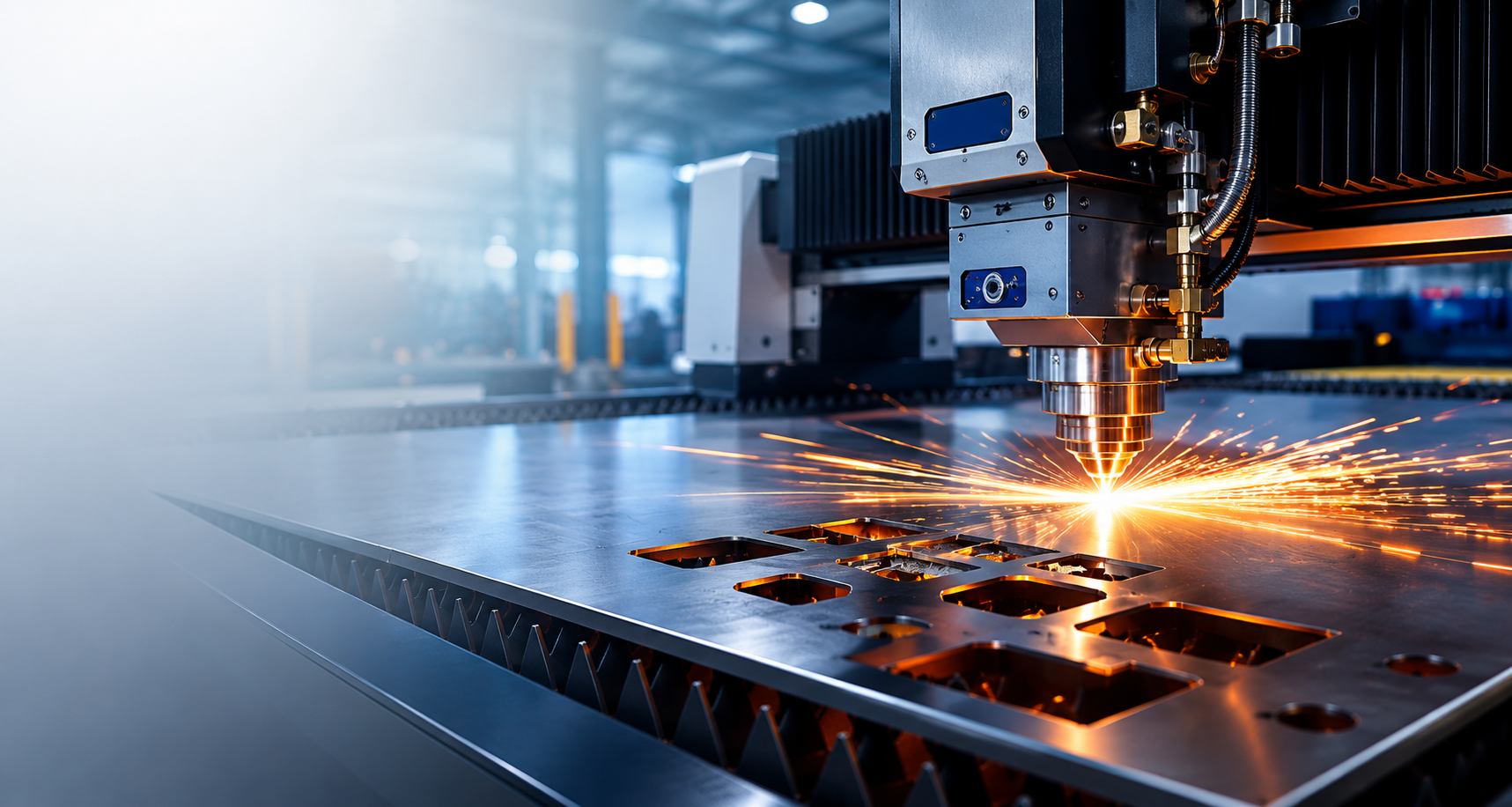
Laser cutting uses a highly focused beam of light controlled by CNC technology to cut metal with exceptional precision. Unlike traditional cutting methods, the laser creates a narrow kerf width, allowing intricate profiles and complex shapes to be produced with minimal material loss.
The process also generates a minimal Heat Affected Zone (HAZ), reducing distortion and preserving the structural integrity of the material. Smooth cut edges often eliminate the need for extensive secondary finishing, helping manufacturers save both time and cost.
Automated CNC programming ensures every component is produced with excellent repeatability, making laser cutting fabrication ideal for high-volume production where consistency is essential.
Benefits of Precision Laser Cutting
Modern precision laser cutting offers numerous advantages for manufacturers:
- Exceptional dimensional accuracy
- Smooth, burr-free cut edges
- Faster production times
- Reduced material waste
- Lower secondary machining requirements
- Consistent quality across production batches
- Improved manufacturing efficiency
- Reduced overall production costs
These advantages help businesses improve product quality while maintaining competitive manufacturing lead times.
Materials Suitable for Laser Cutting
Laser cutting is suitable for a wide range of engineering materials, including:
- Mild Steel
- Stainless Steel
- Aluminium
- Galvanised Steel
- Brass
- Copper (depending on thickness and equipment capability)
Selecting the appropriate cutting parameters for each material ensures optimal edge quality and laser cutting accuracy.
Applications Across Australian Industries
High-precision laser cutting metal fabrication is widely used in:
- Automotive manufacturing
- Mining equipment
- Agricultural machinery
- Heavy fabrication
- Industrial machinery
- Structural steel projects
- Electrical enclosures
- Precision engineering
These industries rely on accurate, repeatable components that integrate seamlessly into larger assemblies while maintaining strict quality standards.
Why Choose Gaja Engineering?
At Gaja Engineering, we combine precision manufacturing expertise with advanced fabrication technologies to deliver reliable, high-quality components for Australian industries. Every project is completed with a strong focus on dimensional accuracy, quality inspection, and consistent production standards.
Whether your project requires custom brackets, machine components, structural parts, or complex fabricated assemblies, our team delivers solutions designed for long-term performance.
Conclusion
As manufacturing standards continue to evolve, laser cutting metal fabrication remains one of the most accurate and efficient methods for producing high-quality metal components. Its ability to deliver tight tolerances, smooth finishes, minimal material waste, and excellent repeatability makes it an essential process for modern engineering projects.
If you’re looking for precision metal fabrication backed by quality workmanship and dependable service, Gaja Engineering is ready to support your next project with tailored manufacturing solutions.
Frequently Asked Questions (FAQ)
1. What is laser cutting in metal fabrication?
Laser cutting is a precision manufacturing process that uses a high-powered laser beam controlled by CNC technology to cut metal with exceptional accuracy. It produces clean edges, tight tolerances, and minimal material waste, making it ideal for modern metal fabricatio
2. Why is laser cutting more accurate than plasma cutting?
Laser cutting creates a much narrower kerf width and smaller Heat Affected Zone (HAZ) than plasma cutting. This results in smoother edges, tighter dimensional tolerances, less distortion, and greater repeatability for precision-engineered components.
3. What materials can be laser cut?
Laser cutting is suitable for a wide range of metals, including mild steel, stainless steel, aluminium, galvanised steel, brass, and copper (depending on thickness and machine capability). The correct laser settings ensure optimal cutting quality for each material.
4. Does laser cutting reduce manufacturing costs?
Yes. Laser cutting reduces material waste, minimises secondary machining, shortens production times, and improves manufacturing efficiency. These benefits help lower overall production costs while maintaining high-quality results.
5. Which industries benefit most from precision laser cutting?
Industries such as automotive manufacturing, mining, heavy fabrication, industrial machinery, agricultural equipment, structural steel, electrical enclosures, and precision engineering all rely on laser cutting for accurate, repeatable components.
6. Why choose Gaja Engineering for laser cutting and metal fabrication?
Gaja Engineering combines advanced CNC manufacturing, precision laser cutting, strict quality control, and Australian engineering expertise to produce high-quality fabricated components that meet demanding OEM and industrial standards.

