

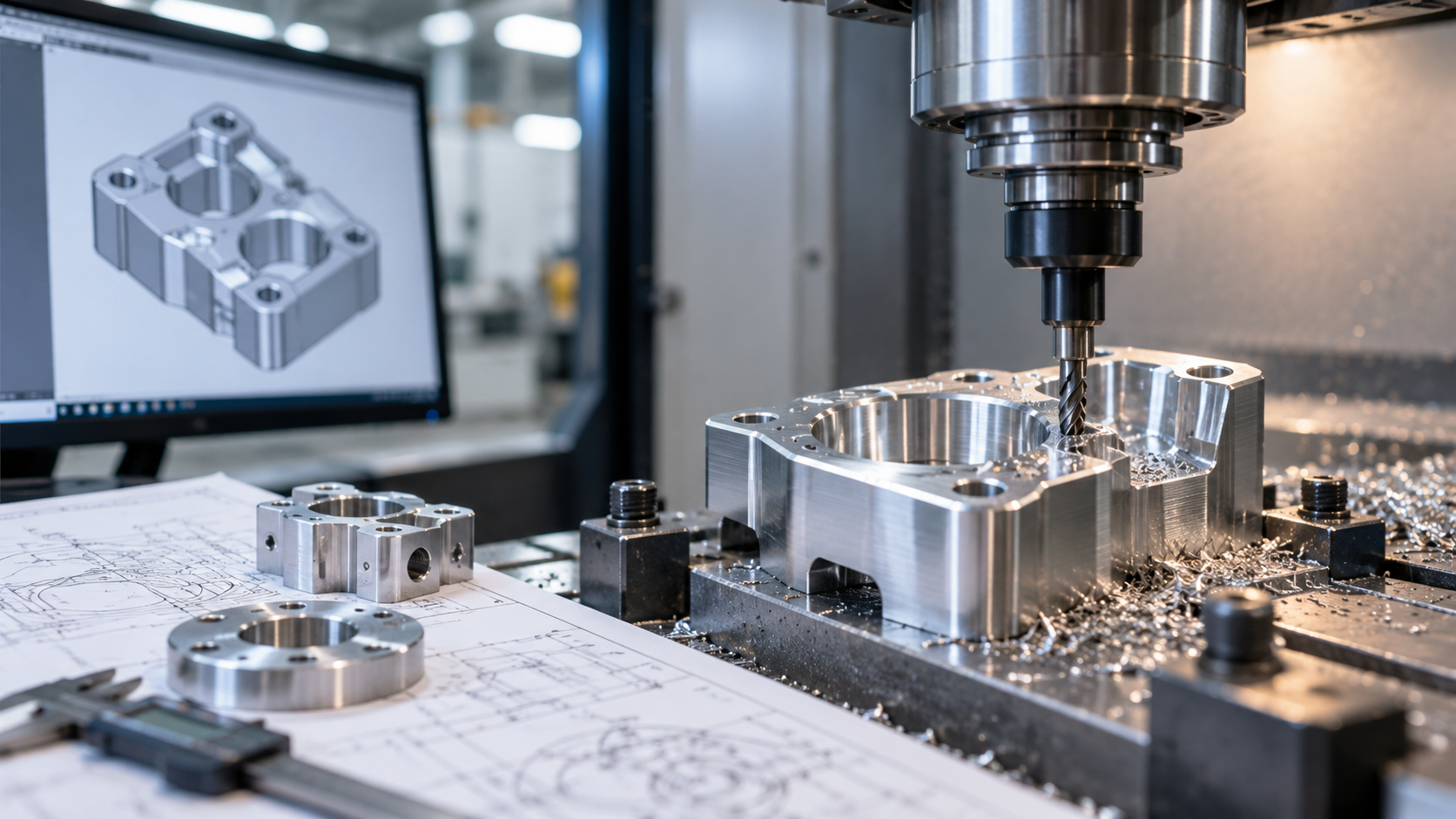
Turning an engineering concept into a production-ready component requires careful planning, accurate machining and efficient design validation. For Australian manufacturers, delays during product development can increase costs, disrupt project timelines and postpone market launches.
CNC machining prototypes help businesses transform digital designs into accurate physical components, test functionality and identify design issues before committing to full-scale production. By combining precision manufacturing with early engineering feedback, businesses can accelerate product development while maintaining quality and reliability.
For companies seeking CNC machining in Australia, a well-planned prototyping process can create a smoother path from initial design to commercial manufacturing.
What Is CNC Machining Prototyping?
CNC machining prototyping is a manufacturing process that uses computer-controlled equipment to produce physical parts from digital CAD designs. It removes material from metal or suitable engineering plastics to create components that match specified dimensions and geometries.
Unlike visual-only models, CNC machined prototypes can help engineers evaluate fit, strength, tolerances and assembly performance using representative materials.
This makes CNC prototyping services valuable for Australian engineering firms, OEMs, mining equipment manufacturers and industrial product developers that require functional components before production begins.
How CNC Machining Prototypes Accelerate Production
1. Validate Designs Before Manufacturing
A digital model cannot always reveal practical problems such as tool access limitations, component interference or assembly difficulties.
Producing a CNC prototype allows engineers to test critical dimensions, identify design flaws and make informed improvements before larger manufacturing commitments are made.
Early validation can reduce avoidable rework and help control product development costs.
2. Improve Design for Manufacturability
Design for Manufacturability (DFM) evaluates whether a component can be produced efficiently without compromising its intended performance.
During prototype development, engineers can review wall thicknesses, internal corners, hole dimensions, machining access and tolerance requirements.
For example, relaxing unnecessarily tight tolerances on non-critical features may reduce machining time and cost. These improvements help prepare a design for repeatable manufacturing.
3. Choose the Right Materials Early
Material selection affects component strength, durability, weight, corrosion resistance and machining requirements.
Depending on the application, CNC machined prototypes may use aluminium, stainless steel, mild steel, brass or engineering plastics.
Testing a representative material helps engineers assess whether the component meets its intended operating requirements before proceeding to production.
4. Reduce the Gap Between Prototype and Production
Once a prototype passes inspection and functional testing, the approved design can move towards a pilot batch or production run.
Final drawings, material specifications, inspection requirements and machining instructions should be documented and reviewed before scaling up.
This structured approach helps Australian manufacturers reduce repeated engineering work, improve consistency and establish a more predictable production process.

The CNC Prototype-to-Production Workflow
A practical workflow typically follows five stages:
- Design preparation: Develop the CAD model and technical drawings, including critical dimensions and tolerances.
- Engineering review: Assess machinability, material suitability and manufacturing constraints.
- Prototype machining: Manufacture the component using an appropriate CNC process.
- Testing and inspection: Check dimensions, fit, finish and functional performance against requirements.
- Production planning: Incorporate approved changes and prepare the component for pilot or repeat manufacturing.
Clear communication between design engineers and manufacturing specialists at every stage helps prevent avoidable delays.
Why Choose Gaja Engineering for CNC Machining?
For businesses developing industrial components, access to precision machining and practical manufacturing knowledge can make the transition from design to production more efficient.
Gaja Engineering supports CNC machining and metal fabrication requirements for Australian industrial and engineering applications. Discussing your component requirements early can help establish suitable manufacturing approaches, clarify specifications and identify potential design improvements.
Whether you are refining a new component or preparing an existing design for production, a structured engineering process helps turn ideas into manufacturable parts.
Conclusion: Turn Your Design into Production with Confidence
CNC machining prototypes provide Australian businesses with a practical way to validate designs, improve manufacturability and prepare components for production. By addressing potential problems early and working with clear engineering specifications, manufacturers can make better decisions, manage development costs and move projects forward with greater confidence.
Have an engineering drawing ready? Contact Gaja Engineering to discuss your CNC machining and metal fabrication requirements.
If you found this article useful, share it with your engineering team or colleagues. Have you experienced challenges moving a prototype into production? Share your thoughts and feedback to help other Australian manufacturers learn from your experience.
Frequently Asked Questions (FAQ)
1. What is CNC machining prototyping?
CNC machining prototyping is the process of manufacturing physical components from digital designs using computer-controlled machining equipment. It allows engineers to test dimensions, materials, fit and functionality before production.
2. How does CNC prototyping speed up product development?
CNC prototyping helps identify design and manufacturing issues early, allowing engineers to correct problems before committing to larger production runs. This can reduce rework and unnecessary delays.
3. Is CNC machining better than 3D printing for prototypes?
CNC machining is often preferable when prototypes require specific engineering materials, machined surfaces or precise dimensional features. 3D printing can be more suitable for early concept models and certain complex geometries. The best method depends on the application.
4. What materials are suitable for CNC machined prototypes?
Common materials include aluminium, stainless steel, mild steel, brass and engineering plastics. The appropriate material depends on the component’s strength, environmental exposure, weight and performance requirements.
5. How can I reduce CNC prototype manufacturing costs?
Provide accurate CAD files, clearly identify critical tolerances, select suitable materials and request a design-for-manufacturability review. Avoid unnecessary precision requirements that do not contribute to the component’s function
6. Can CNC machined prototypes move into production?
Yes. Once a prototype has been approved, its validated design and specifications can support pilot manufacturing and repeat production. Additional process validation, inspection planning and capacity assessment may be required depending on the component and production volume.

