

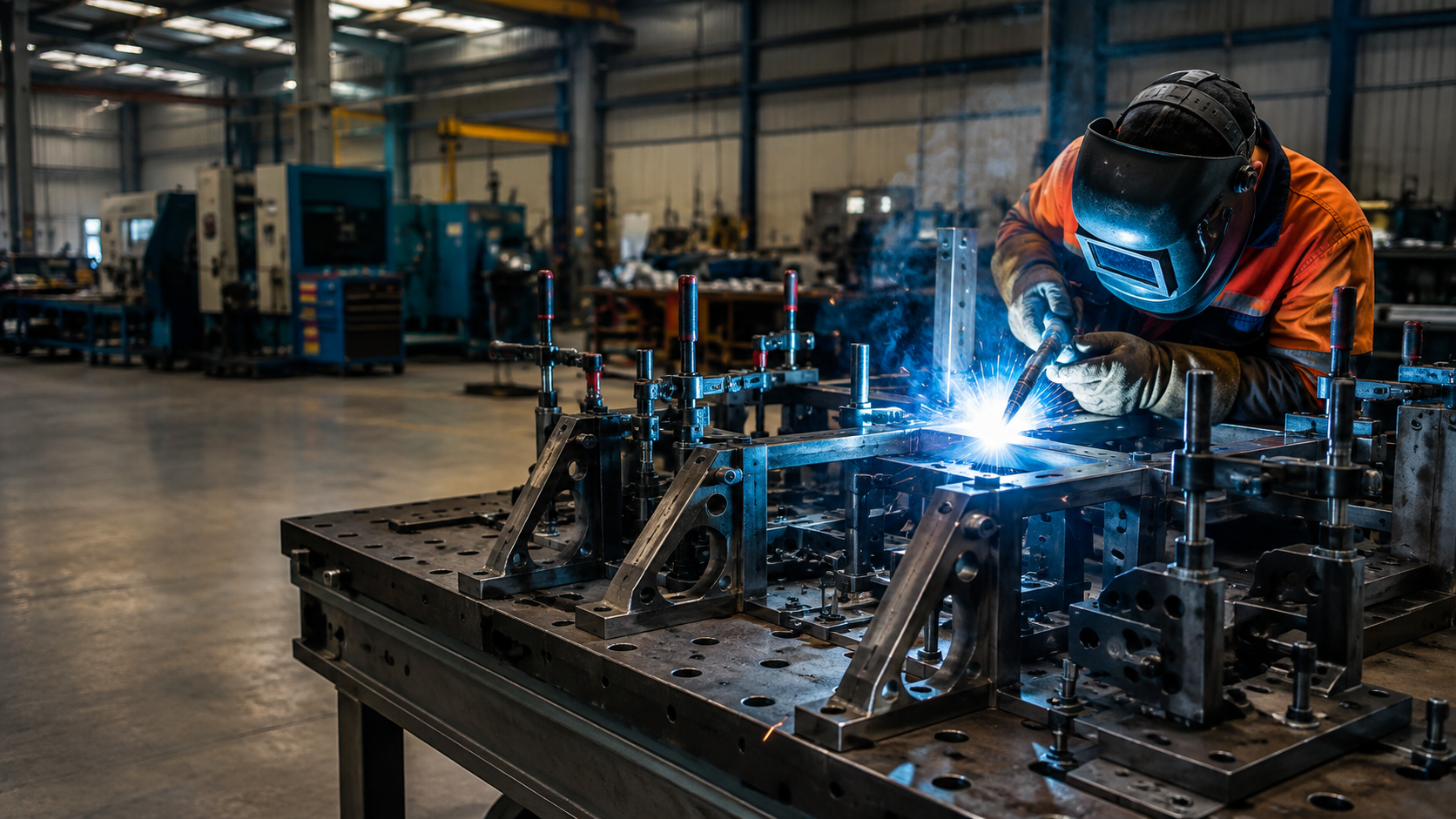
In metal fabrication, achieving consistent dimensions, accurate weld placement and repeatable production can be challenging when components are positioned manually. Custom welding jigs and fixtures provide a practical solution by securely holding components in the correct position throughout the fabrication process.
For Australian manufacturers, engineering companies and fabrication workshops, properly designed welding jigs and fixtures can improve production efficiency, reduce rework and support consistent component quality across repeated projects.
What Do Welding Jigs and Fixtures Do?
Welding jigs and fixtures hold and position metal components accurately during fabrication and welding. They help fabricators maintain consistent alignment, reduce movement during welding and reproduce the same component dimensions across multiple parts.
For repetitive or precision-focused fabrication projects, custom fixtures can significantly improve workflow efficiency and quality control.
1. Improve Welding Accuracy and Component Alignment
One of the biggest advantages of custom welding fixtures is improved positioning.
During manual fabrication, components can shift because of heat, movement or inconsistent clamping. A purpose-built fixture establishes fixed reference points so parts can be positioned consistently before welding.
This is particularly valuable for precision metal fabrication in Australia, where dimensional accuracy and repeatability can be important for industrial components, frames, brackets and fabricated assemblies.
2. Increase Production Efficiency
Fabricators can spend considerable time measuring, marking and repositioning components between welding operations.
A custom jig simplifies this process.
Once the fixture has been designed and tested, operators can place components into predetermined positions and begin welding with less setup time. This makes custom welding jigs for repetitive fabrication projects especially useful for manufacturers producing multiple identical or similar components.
The result can be a faster and more organised fabrication workflow.
3. Reduce Rework and Material Waste
Incorrect positioning can result in misaligned welds, dimensional variations and components that require modification or complete rework.
Custom fixtures help minimise these issues by providing controlled positioning throughout the fabrication process.
Reducing rework can also help Australian businesses control material consumption, labour costs and project delays.
4. Improve Repeatability Across Production Runs
Consistency becomes increasingly important when manufacturing multiple units of the same component.
A properly designed welding fixture acts as a repeatable reference system. Each component can be positioned using the same locating points, helping maintain consistent dimensions from one assembly to the next.
This makes fabrication jigs and fixtures for repeat production valuable for OEM manufacturing, industrial fabrication and batch production.
5. Improve Workplace Safety and Ergonomics
Well-designed fixtures can also make fabrication tasks easier for operators.
Instead of manually holding or repositioning heavy components, fixtures can support the workpiece and provide a more stable working position. This can improve operator ergonomics while making the welding process more controlled.
The fixture design should, however, be matched to the component, welding process, material and production requirements.
6. Custom Fixtures Can Be Designed Around Your Project
Every fabrication project has different requirements. Component geometry, material thickness, weld access, production volume and dimensional tolerances can all influence fixture design.
That is why custom welding fixtures for complex metal fabrication can provide advantages over generic positioning equipment.
An experienced engineering and fabrication team can assess the component and develop a fixture approach suited to the specific production process.
Why Choose Gaja Engineering?
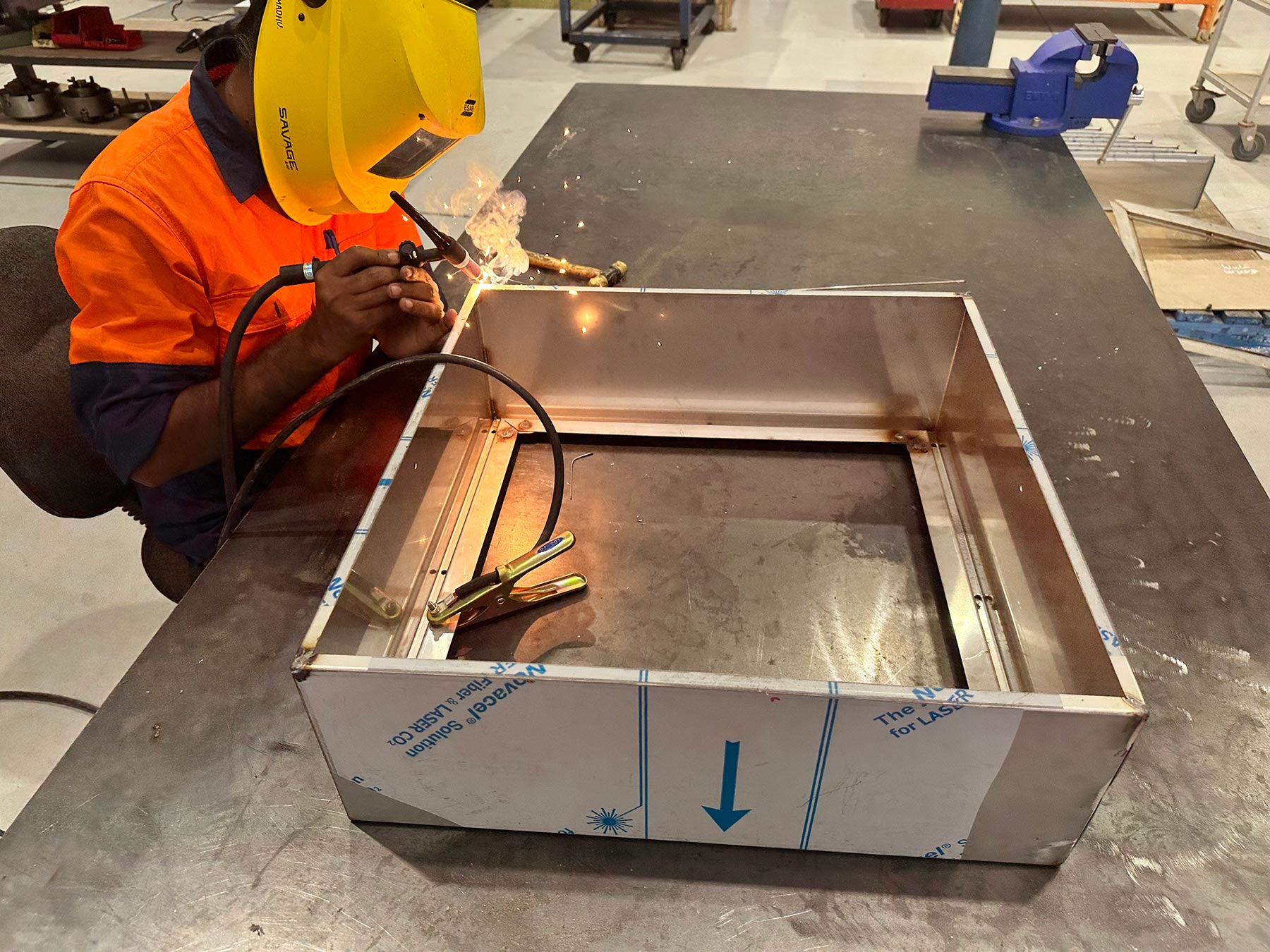
Gaja Engineering supports Australian industrial and manufacturing requirements through engineering, CNC machining, fabrication and welding services.
Conclusion :
Custom welding jigs and fixtures are more than simple holding devices—they can become an important part of an efficient and repeatable metal fabrication process. By improving positioning, reducing setup time and supporting consistent component quality, the right fixture can help Australian manufacturers achieve better production outcomes.
If you found this guide useful, share it with your manufacturing or engineering network and let us know your experience with welding jigs and fixtures in the comments.
For Australian businesses looking for practical engineering and fabrication solutions, Gaja Engineering is ready to discuss your next project.
By combining engineering knowledge with practical workshop capabilities, Gaja Engineering can help businesses approach fabrication projects with greater focus on accuracy, repeatability and production efficiency.
Frequently Asked Questions (FAQ)
1. What is a welding jig?
A welding jig is a positioning and holding device used to locate components consistently during welding. It helps maintain alignment and repeatability between fabricated parts.
2. What is the difference between a welding jig and a fixture?
A jig generally helps position or guide a component or tool, while a fixture primarily holds and locates the workpiece during manufacturing. In fabrication, the terms are sometimes used interchangeably.
3. Are custom welding fixtures suitable for small production runs?
Yes. Custom fixtures can be worthwhile for small production runs when accurate positioning, repeatability or reduced setup time is important.
4. How do welding jigs improve fabrication efficiency?
They reduce repeated measuring, marking and positioning tasks, allowing components to be located more quickly and consistently before welding.
5. Can welding fixtures be designed for complex components?
Yes. Custom fixtures can be designed around component geometry, weld access, material, tolerances and the required manufacturing process
6. How can Australian manufacturers benefit from custom welding jigs?
Custom welding jigs can help improve repeatability, reduce rework, streamline production and support consistent quality across fabricated components.

